Weaving Truths
A game inspired by the complexity of nature
Co-Authors
- Anfal Alzarraj
- Isabela Andrade de Oliveira e Castro
- Romchel M. Fuentes
- Susana Pérez Alves
- Alice Torzoni
Year
2026
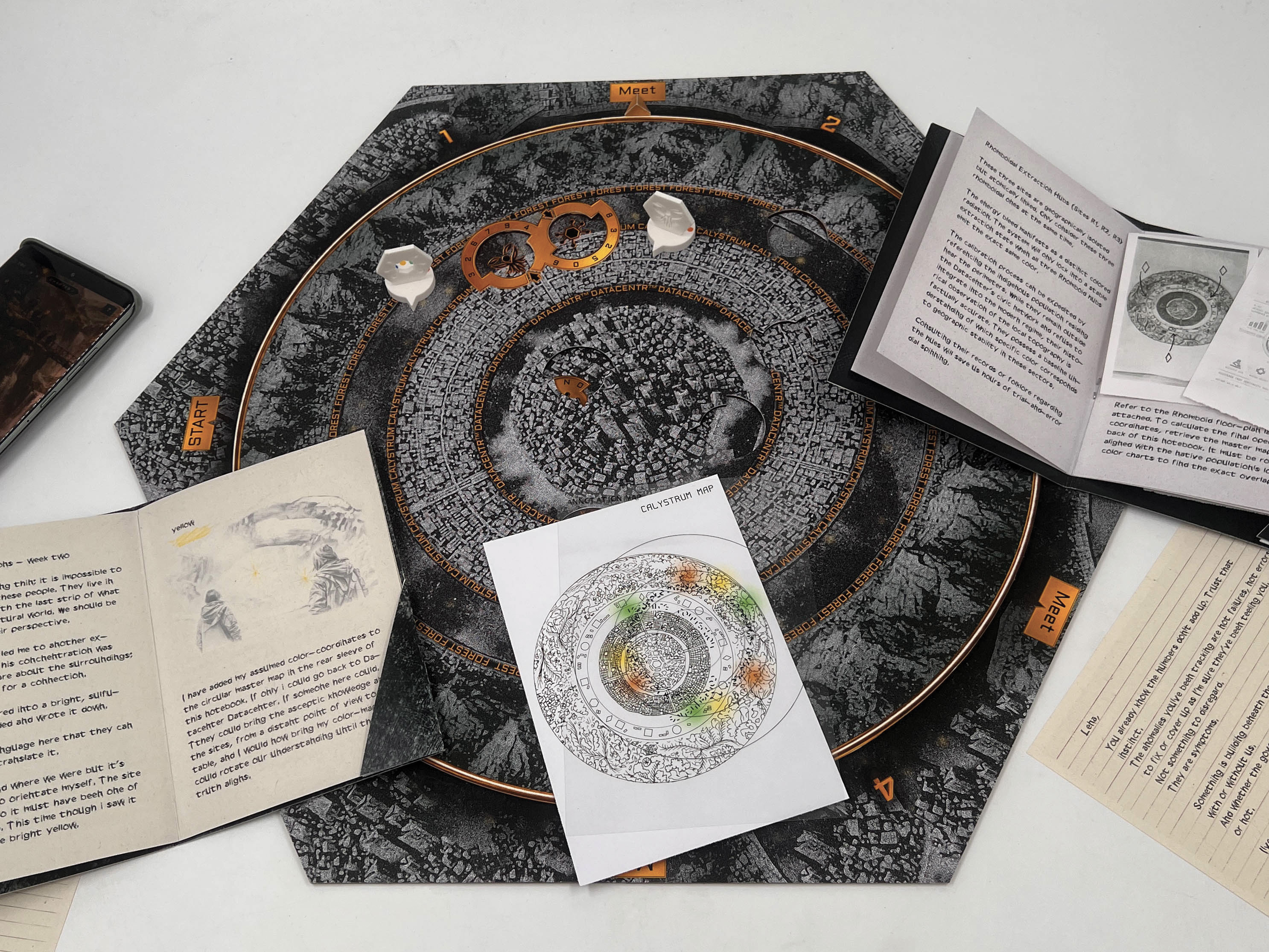
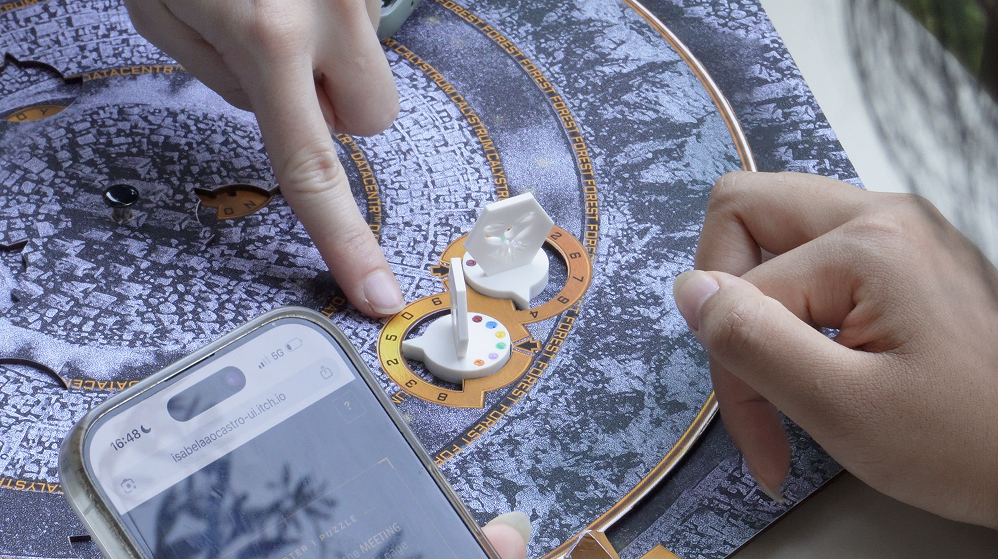
Weaving Truths is a two-player hybrid game developed in the context of a Design Studio at Politecnico di Milano. The game combines a physical board and a digital mobile environment, set in a fantasy world that is losing its balance. Players take on the roles of two characters and explore the world separately, each encountering different characters who offer fragmented perspectives on why things are falling apart.
Context
This project was created in the Complex Artifacts and System Design Studio at the Politecnico di Milano. In this lab we were tasked to develop a in interactive digital narrative to raise awareness and examine how climate change, socio-economic dynamics, and policy frameworks have an impact on the agrifood system.
After an initial research, we defined that our project would address pollinator decline. Therefore, our game aimed to foster a deeper understanding of the complexity of natural systems and the interconnected relationships that sustain them. Through play, participants discover that even the smallest actions can trigger cascading effects across the entire system.
The central message of the game is that changing one element of a system inevitably affects many others, much like the butterfly effect. As players interact with the game, they experience how individual decisions influence the balance of the ecosystem, revealing both visible and hidden consequences. In this way, the game also reflects contemporary ideas of uncertainty and interconnectedness, where cause and effect are often difficult to predict.
The backstory
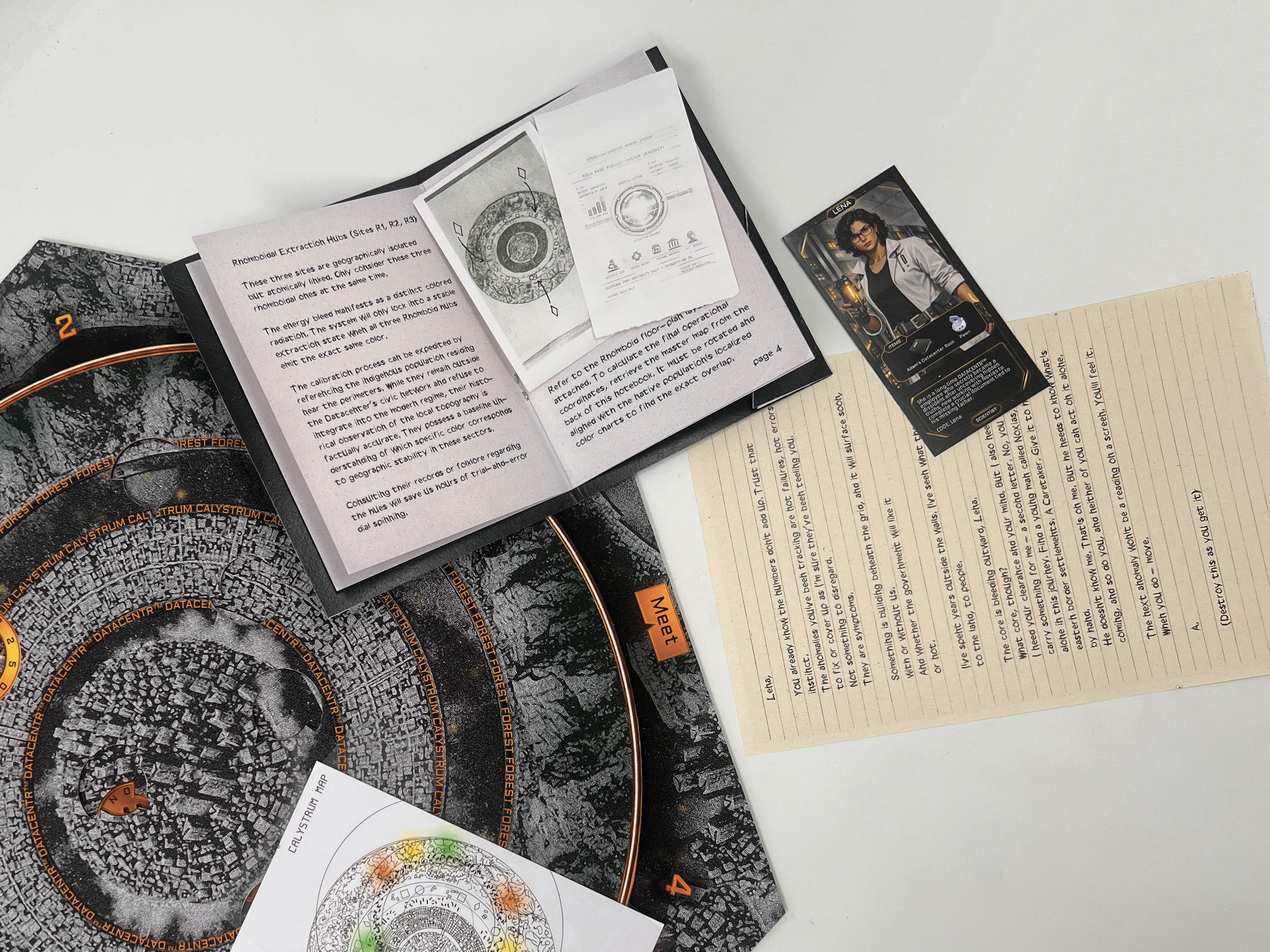
The game is setted in a fantasy dystopian world which is divided in two worlds. On one side, there is Calystrum is a technocratic world shaped by pollution, in which society is centered around a massive gold-built data center that governs how people live and work. Those who resist the system are marginalized to the city's outskirts, in which there are communities that are connected to the nature. On the other side, Noctichroma is a dark, bioluminescent dimension beneath Calystrum, connected to it through gold-pit portals. It's home to non-human beings who generate light, electrical, and chemical energy.
Noctichroma once existed in a symbiotic loop with Calystrum, exchanging energy and signals across the portals. But as Calystrum mines away the gold that anchors those portals, the connection weakens — less light and energy reach the underworld, and it begins to starve.
The mechanics
For this prototype, I developed the four minigames featured in the digital environment, adapting the visual language established by our team’s designer. The mini games were added to to add a level of challenge for the players while also complementing the overall narrative.
To complement the narrative and add a level of challenge for the pla, these puzzles offer tactile, individual challenges directly tied to earlier character interactions. We decided to leverage the mobile environment to build mechanics around device-native hardware, using p5.js alongside ml5.js for real-time camera hand-tracking, and p5-phone to tap into gyroscope and sensor data.
Elements
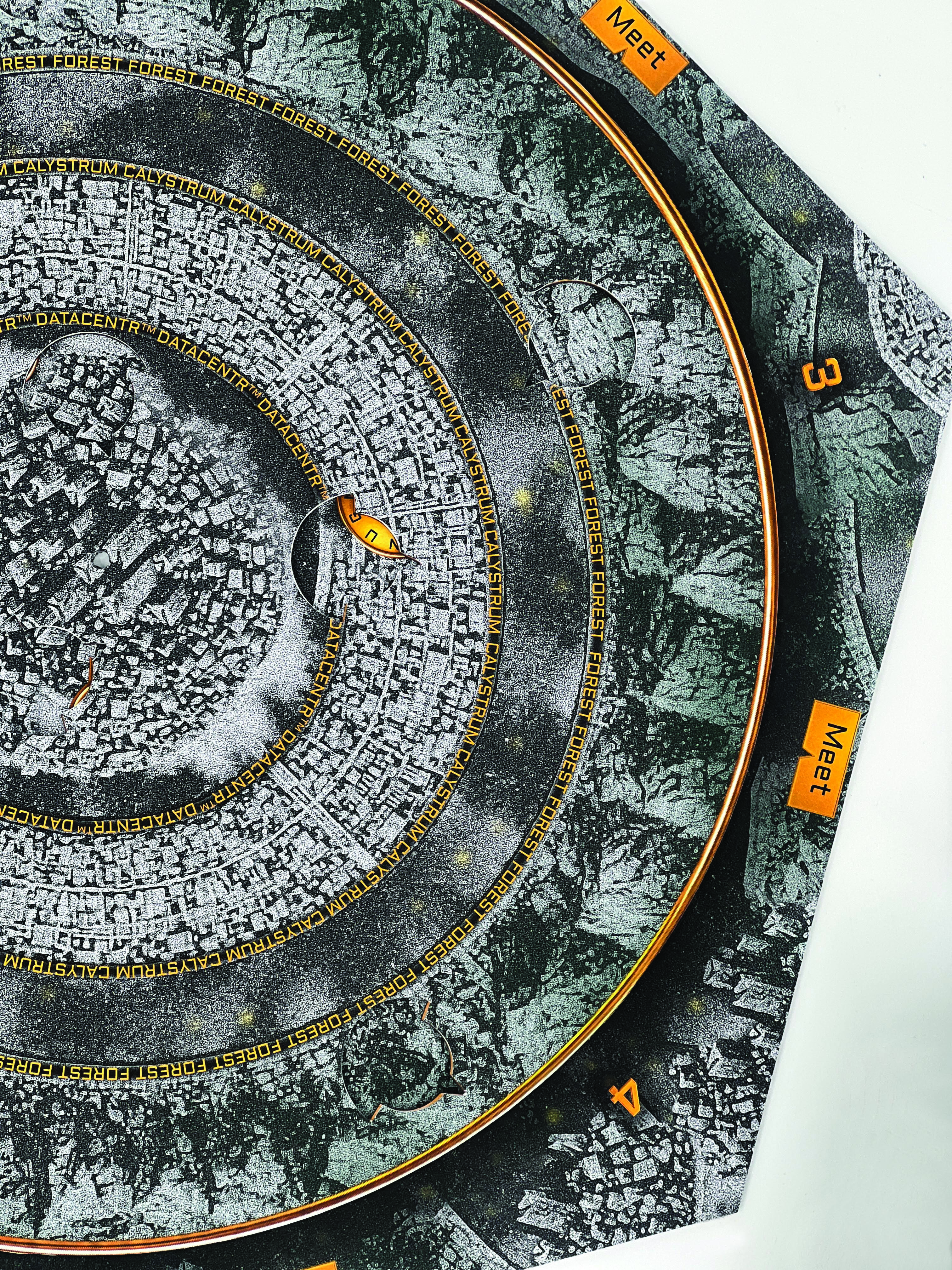
Revolving game board that reveal chapters and meeting points
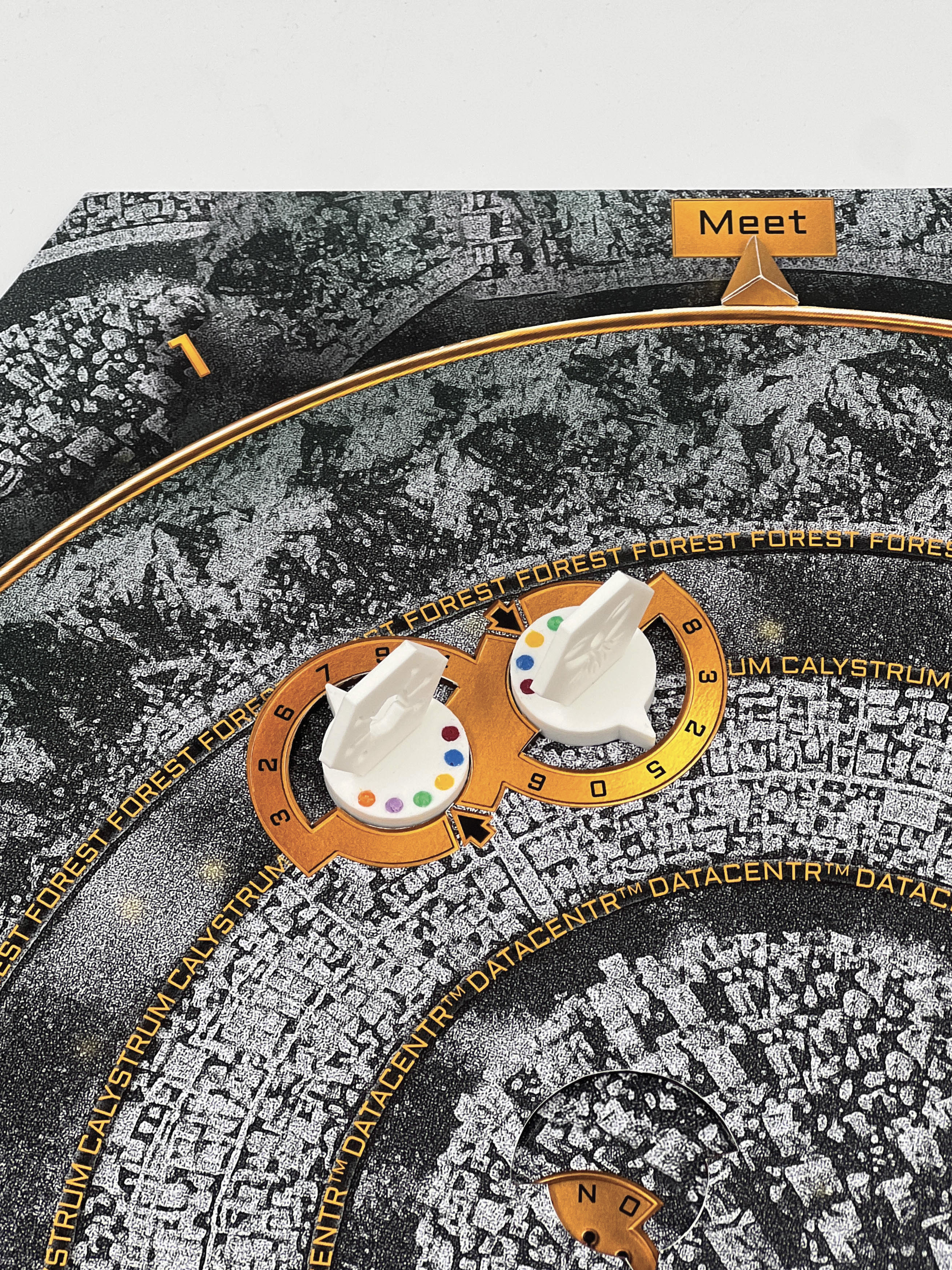
Two pawns, one for each character
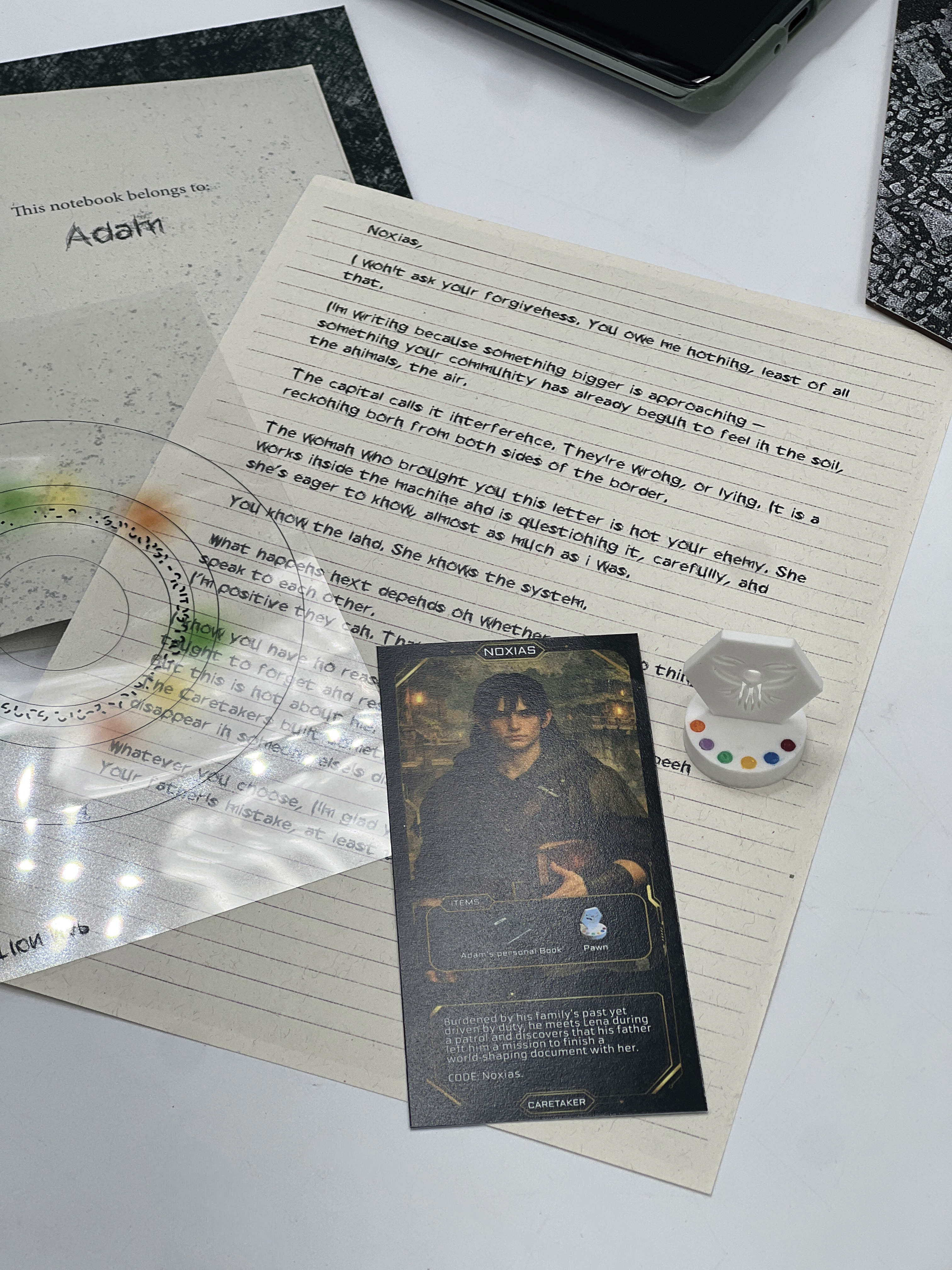
Materials for each character,
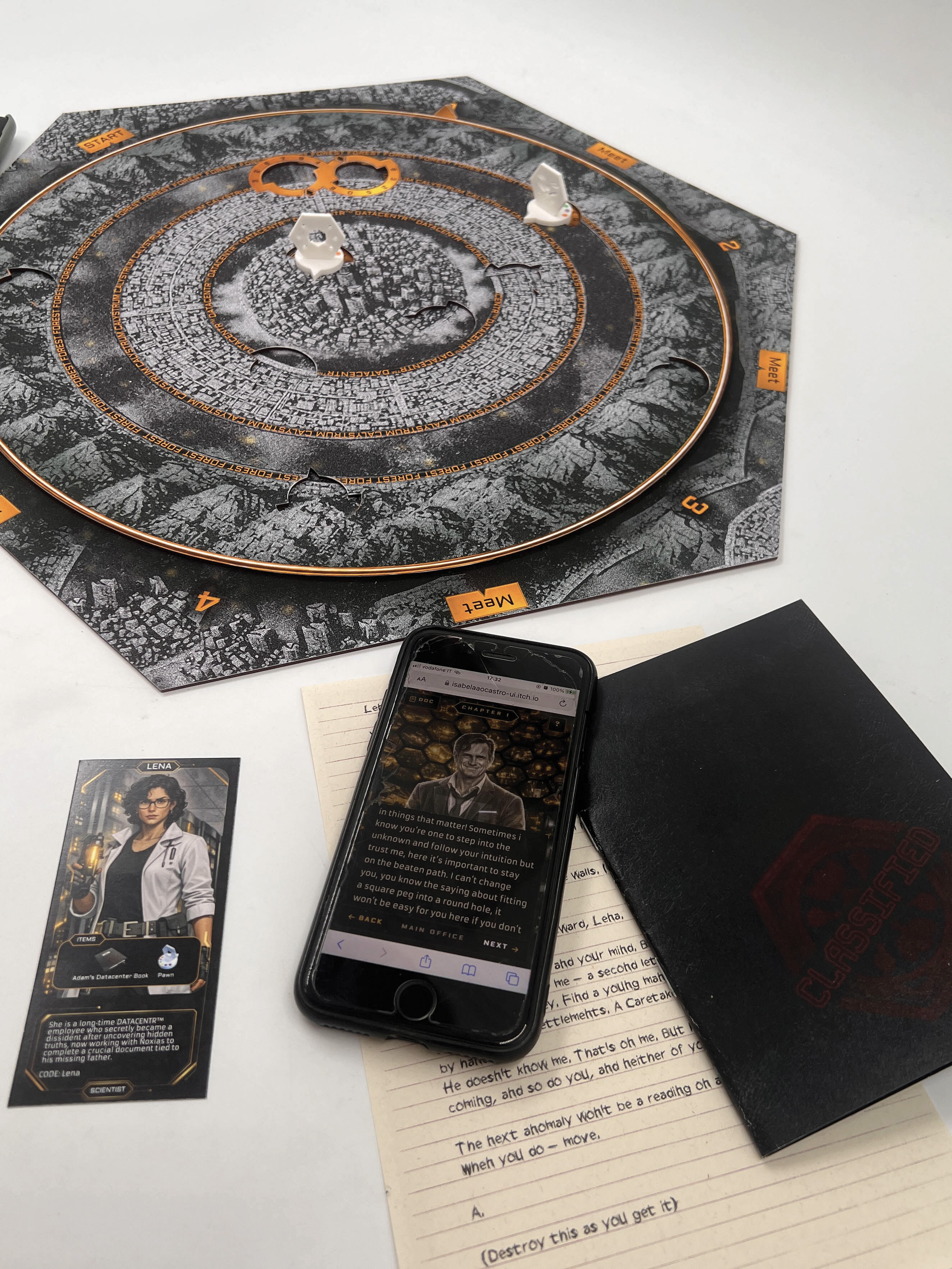
A digital game
My role
For this prototype, I developed the four minigames featured in the digital environment, adapting the visual language established by our team’s designer. The mini games were added to to add a level of challenge for the players while also complementing the overall narrative.
To complement the narrative and add a level of challenge for the pla, these puzzles offer tactile, individual challenges directly tied to earlier character interactions. We decided to leverage the mobile environment to build mechanics around device-native hardware, using p5.js alongside ml5.js for real-time camera hand-tracking, and p5-phone to tap into gyroscope and sensor data.
Revolving game board that reveal chapters and meeting points
Revolving game board that reveal chapters and meeting points
Revolving game board that reveal chapters and meeting points
Revolving game board that reveal chapters and meeting points